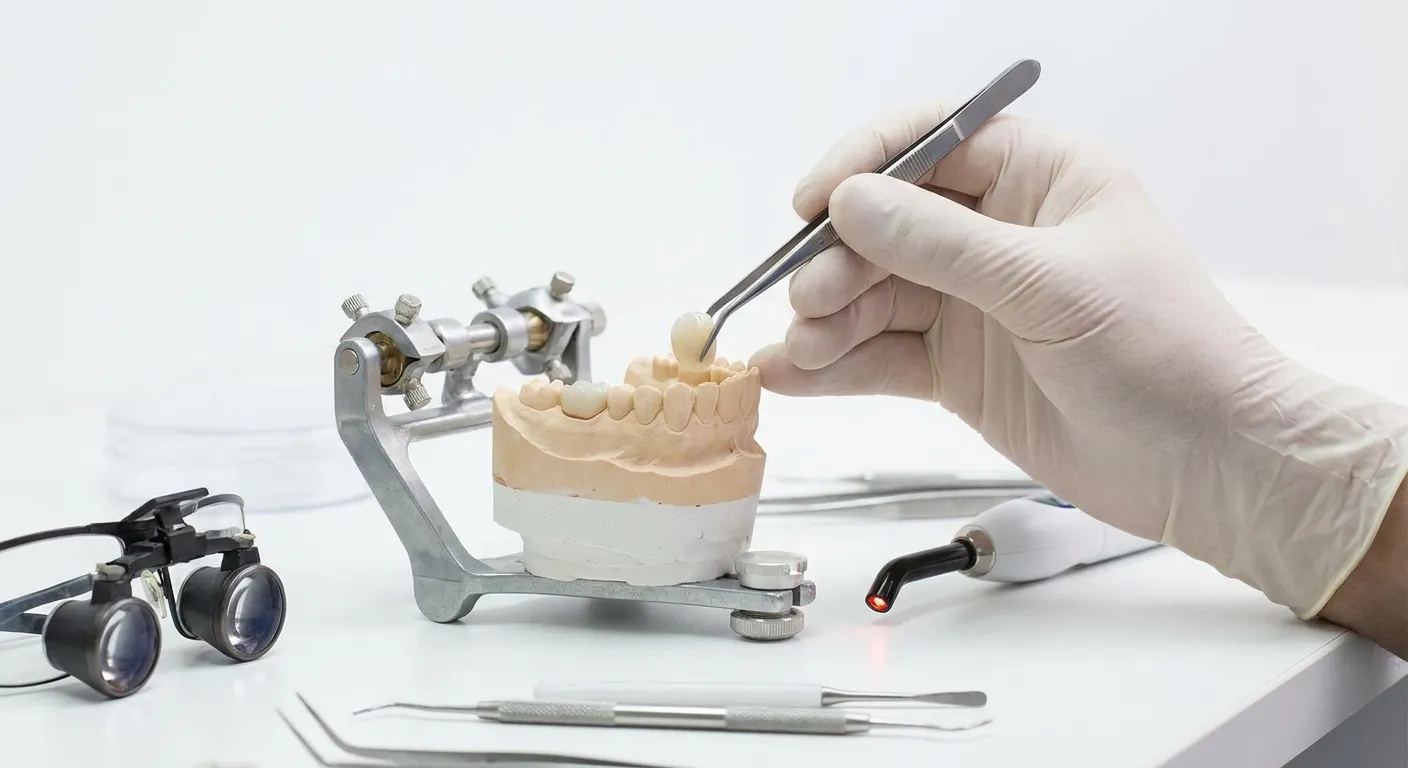
What a Dental Crown Actually Does
Think of a crown as a protective cap that fits over a tooth that's been damaged, weakened, or significantly decayed. It restores the tooth's shape, size, and strength so you can chew normally and not have to worry about that tooth breaking down further. The crown is cemented in place and, once it's on, functions just like your natural tooth — you brush it, floss around it, and mostly forget it's there.
We use crowns made from a few different materials depending on where the tooth is located and what the patient needs. Porcelain and ceramic crowns are the most popular for front teeth because they match the natural color of your smile closely. For back teeth that take more chewing force, we sometimes recommend porcelain-fused-to-metal or zirconia crowns, which offer more durability. We always walk patients through the options before anything is decided — there's no one-size-fits-all answer, and the right choice depends on your individual situation.
When We Recommend a Crown
Not every damaged tooth needs a crown, and we're not in the habit of recommending one unless it genuinely makes sense. That said, there are several situations where a crown really is the right call. A tooth that has a crack running through it — even one you can't see — is at serious risk of splitting if it's not protected. A large cavity that's taken out too much of the tooth structure for a filling to hold reliably is another common reason. After a root canal, the tooth becomes more brittle and vulnerable, so a crown is almost always placed to protect it.
We also place crowns to anchor a dental bridge when a patient is missing a tooth, and they're the visible portion of a dental implant. Sometimes patients come in from the Milwaukee area or over from Wauwatosa with teeth that have been worn down significantly from grinding over the years — crowns can restore that lost structure and protect what's left.
One patient we treated had been putting off a cracked molar for months because it only hurt occasionally and they figured it wasn't urgent. By the time they came in, the crack had extended far enough that we were genuinely concerned about saving the tooth. We were able to place a crown and keep the tooth, but it was closer than it needed to be. That kind of wait-and-see approach with a cracked tooth is one of the situations where early treatment really does make a difference in the outcome.
What the Crown Process Looks Like, Step by Step
Most crowns are completed over two appointments, though we'll give you a clear timeline specific to your case before we start. At the first visit, we numb the area thoroughly — patient comfort is something we take seriously here, and nobody should feel like they're white-knuckling through dental work. Once you're comfortable, we reshape the tooth slightly to make room for the crown to fit over it properly. The amount we remove depends on the crown material and the condition of the tooth going in.
After the tooth is prepared, we take a precise impression — either a traditional mold or a digital scan, depending on the case — and that impression goes to the dental lab where your permanent crown is fabricated. We place a temporary crown over the prepared tooth to protect it while you wait, which is usually a couple of weeks. The temporary is functional, but we do ask patients to be a little careful with it — avoid very sticky or hard foods on that side if you can.
When the permanent crown comes back from the lab, you come in for the second appointment. We remove the temporary, check the fit and color match carefully, make any minor adjustments needed, and cement the permanent crown in place. Most patients are surprised by how straightforward that second visit is — it typically takes less than an hour, and you leave with a fully restored tooth.
After the crown is placed, some mild sensitivity to temperature or pressure is normal for a few days while things settle. If you're feeling significant discomfort or your bite feels off after a week, we want to hear from you. Getting the bite adjusted is a simple fix, and we'd rather address it quickly than have you uncomfortable.
How Long a Crown Lasts and How to Take Care of It
A well-made crown placed on a properly prepared tooth can last fifteen years or more — sometimes much longer. The biggest factors are the quality of the fit, the material used, and how well you take care of it at home. Crowns aren't immune to problems. The tooth underneath can still develop decay, particularly at the margin where the crown meets the gumline, which is why brushing and flossing around a crowned tooth matters just as much as with a natural one. We sometimes see patients who assume a crown means that tooth is untouchable, and unfortunately that's not quite right.
Grinding and clenching can shorten the lifespan of a crown significantly, and if that's something you do — often without realizing it — we may recommend a nightguard to protect your investment. We also check your crowns at every routine exam to make sure the margins are still sealed and the structure is intact. Catching a small issue early is always easier than dealing with a larger one later.
For patients in the West Allis and greater Milwaukee area who are looking for a crown dentist they can trust, the most important thing is finding a practice that takes the time to explain what you need and why. We've always believed that an informed patient makes better decisions about their care — and ends up with better outcomes.