The Early Signs Most People Brush Off
The most common early sign of gum disease is bleeding gums, and you'd be surprised how many patients tell us they thought that was just normal. It isn't. Healthy gum tissue does not bleed when you brush or floss — if yours do, that's your mouth telling you something is off. We had a patient a while back, a woman in her early forties who had been coming to us for years, who mentioned almost as an afterthought that her gums had been bleeding a little every morning. She assumed she was just brushing too hard. When we took a closer look, she had early-stage gingivitis that had gone unaddressed long enough to start affecting the bone underneath. We caught it in time, but it was a good reminder that 'a little bleeding' is never something to wave away.
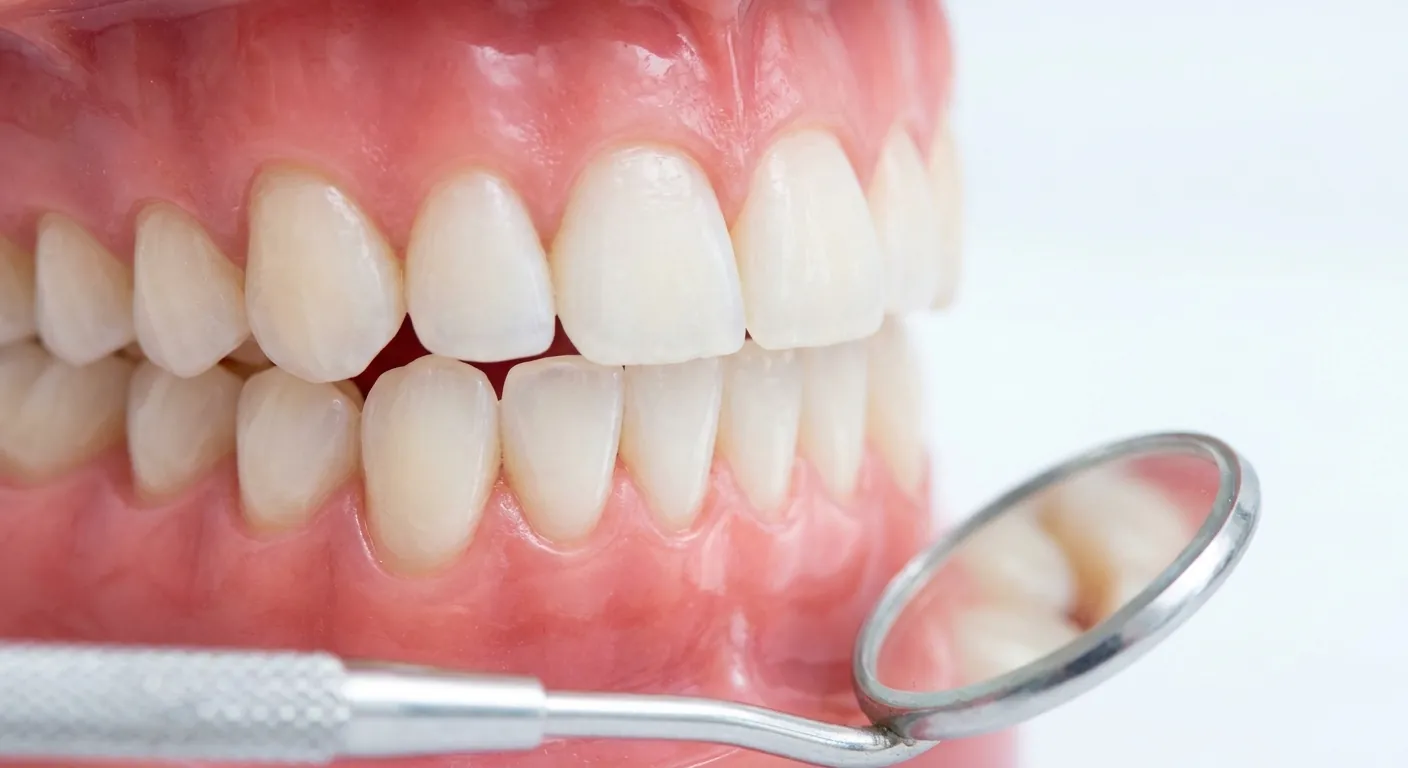
Redness and puffiness around the gumline are two more signs that often get overlooked. Gums should be a firm, pale pink — not swollen, not shiny, not tender to the touch. If your gums look darker red than usual or feel sore when you press on them with your tongue, that inflammation is your immune system actively fighting a bacterial infection. That's periodontal disease in its early form, and the good news is that at this stage, it's very treatable.
Signs That Suggest the Disease Has Progressed
Persistent bad breath is something we talk about more than people expect at a family dental practice. Everyone has morning breath — that's just biology. But if you're brushing twice a day, flossing, and still noticing that your breath has a sour or unpleasant odor that won't quit, that can be a sign of bacterial buildup deep in the pockets between your teeth and gums. The bacteria responsible for periodontal disease produce sulfur compounds, and no amount of mouthwash covers that up for long.
Receding gums are another progression sign that we see frequently in patients from all over the Milwaukee area — West Allis, Wauwatosa, Greenfield, you name it. When gums pull back from the teeth, it exposes the root surfaces, which aren't protected by enamel the way the crowns of your teeth are. This leads to sensitivity to cold drinks or sweets, and it also makes those exposed root surfaces more vulnerable to decay. If your teeth look longer than they used to, or if you can feel a notch or ridge near the gumline with your tongue, please don't wait to have that evaluated.
Tooth sensitivity that seems to have appeared out of nowhere — especially when it's localized to one or two teeth rather than your whole mouth — can also point to gum recession or bone loss. We want to be clear: sensitivity alone doesn't mean gum disease, but when it shows up alongside other signs on this list, it becomes much more meaningful.
The Warning Signs That Mean You Need to Call Us Today
Loose teeth in an adult are never normal, and they are one of the most urgent signs of advanced periodontal disease. The gums and bone around your teeth act like a socket — when that support structure is destroyed by chronic infection, teeth begin to shift or feel unstable. You might notice a tooth that wiggles slightly when you press on it, or you might find that your bite has changed and your teeth don't come together the way they used to. By the time teeth are visibly loose, there has typically been significant bone loss, and treatment becomes more complex. We're not saying this to frighten anyone — we're saying it because we've been able to help patients in exactly this situation, and earlier intervention always leads to better outcomes.
Pus between the teeth and gums is another sign that requires prompt attention. If you ever notice a white or yellowish discharge when you press on your gums, that's an active infection, and it needs to be treated. Similarly, if part of your gum feels like it has a small, painful lump or abscess, that's your body trying to wall off a serious bacterial problem. These situations don't resolve on their own.
Finally, a change in how your partial denture fits, or how your teeth come together when you bite down, can reflect underlying bone changes caused by periodontal disease. The architecture of your jaw is remarkably stable when your gums and bone are healthy — when it shifts, something has changed. We take these reports seriously and always investigate further when a patient mentions that something just feels different in their mouth.
What Gum Disease Treatment Actually Looks Like
We want to be honest with you: gum disease treatment is not a single appointment, and it's not the same for everyone. For patients with early gingivitis, a thorough professional cleaning combined with improved home care is often enough to reverse the inflammation completely. For patients with more advanced periodontal disease, we typically recommend a procedure called scaling and root planing — a deep cleaning that goes below the gumline to remove the bacterial deposits that regular cleanings can't reach. It sounds more intimidating than it is. We use local anesthetic, we work gently, and most patients are genuinely surprised by how manageable it is.
What we've learned over decades of treating families in the West Allis and greater Milwaukee area is that the patients who do best are the ones who come in regularly and communicate openly. Gum disease has real risk factors beyond oral hygiene — smoking, diabetes, certain medications, and even genetics all play a role. Dr. Wong, Dr. Park, and Dr. Xiao each take the time to understand a patient's full health picture, because gum disease doesn't exist in isolation. There's well-established research linking periodontal disease to cardiovascular disease, diabetes complications, and other systemic conditions. Your mouth is part of your body, and we treat it that way.