First, We Take a Look Before Anyone Picks Up a Tool
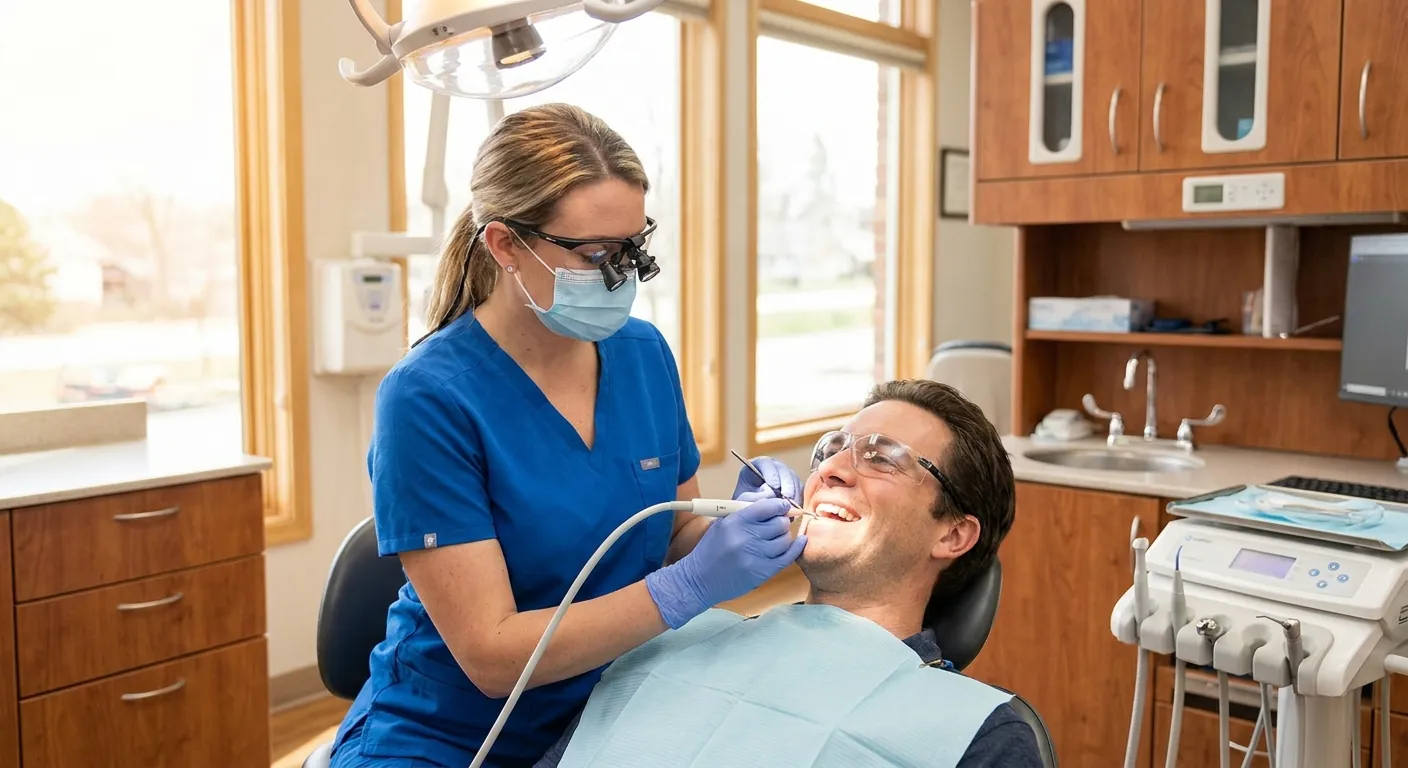
Before any cleaning begins, one of our hygienists does a visual assessment of your mouth. This isn't just a formality — it shapes everything that comes next. We're checking the condition of your gums, looking for any areas of redness or recession, noting whether there's light buildup or heavier calculus deposits, and flagging anything that the dentist should look at more closely. If you're a new patient, or if it's been a few years since your last visit, this step takes a little longer, and that's a good thing. We'd rather spend an extra few minutes understanding what's going on in your mouth than rush through and miss something.
For patients who are due for X-rays — typically once a year for most adults — we'll take those at this stage too. Digital X-rays at our practice use significantly less radiation than older film-based systems, and they give us a clear picture of what's happening between teeth and below the gumline where we simply can't see otherwise. We know some patients feel a little claustrophobic with the sensor in their mouth, and we're always happy to slow down or take a break. Nobody here is in a rush.
The Cleaning Itself: Scaling, Polishing, and What That Scraping Sound Actually Is
The part most people associate with a dental cleaning is the scaling — that's the process of removing tartar (also called calculus) from the surfaces of your teeth, including along and just below the gumline. Tartar is hardened plaque that can't be removed by brushing at home, no matter how diligent you are. It builds up over time, and if it's left in place, it creates an environment where the bacteria that cause gum disease can thrive. The metal scraping tool your hygienist uses is called a scaler, and yes, it makes a sound that can feel more dramatic than it actually is. We also use an ultrasonic scaler for many patients — it uses water and vibration to break up deposits more gently, and a lot of people find it more comfortable than the hand instruments.
Once the scaling is done, we polish your teeth using a slightly gritty paste and a soft rubber cup. This removes surface stains and leaves your teeth feeling smooth and clean. The paste comes in different flavors — mint is the most popular, but we have options. That smooth feeling you have when you run your tongue over your teeth after a cleaning? That's the polished enamel surface, and it actually makes it a little harder for plaque to stick in the short term. We finish with flossing to clear out anything between the teeth and check the gumline one more time.
We had a patient a while back — a woman who'd been coming to us for years from the Wauwatosa area — who always tensed up the moment the scaler came out. We started using the ultrasonic tool for her exclusively and giving her a hand signal to use if she needed a break. It changed her whole experience. She told us at her last visit that she actually looks forward to cleanings now, which is exactly what we want to hear.
The Dentist Exam: What We're Actually Looking For
After the hygienist finishes, one of our dentists — Dr. Wong, Dr. Park, or Dr. Xiao — will come in to do a thorough exam. This typically takes five to ten minutes, and it covers a lot of ground. We're checking each tooth individually for signs of decay, cracks, or wear. We look at your existing restorations — fillings, crowns, anything that's been done previously — to make sure they're still holding up. We examine your gums and measure pocket depths if needed, which tells us whether there are signs of early or progressing gum disease. We also do an oral cancer screening, checking your lips, tongue, the floor of your mouth, and the soft tissues of your cheeks and throat. This part takes less than two minutes and is genuinely important — oral cancer is highly treatable when caught early, and it's something we take seriously at every single exam.
If we find something during the exam, we'll tell you clearly and calmly. We're not going to alarm you or pressure you into treatment on the spot. We'll explain what we're seeing, what it means, what your options are, and what happens if you choose to wait. Patients in the Milwaukee area have a lot of choices when it comes to dental care, and we've kept people coming back to our S 60th St practice for generations because we're straight with them. Dr. Park, who is bilingual in Korean and English, also makes it a point to explain findings thoroughly — he knows how much it matters to actually understand what's going on in your own mouth.
How Long It Takes and How Often You Should Come In
A routine cleaning and exam for an adult with generally healthy teeth and gums typically takes about 45 minutes to an hour. If it's been a while since your last cleaning, or if there's significant buildup or early gum disease present, the appointment may take longer — and in some cases, we might recommend a deeper cleaning called scaling and root planing, which is a separate procedure. We'll always explain why before we proceed with anything beyond a standard cleaning.
For most adults, we recommend a cleaning every six months. Some patients with a history of gum disease, or those who tend to build up tartar quickly, benefit from coming in every three to four months. Kids are generally on a six-month schedule too, and starting them young — we see a lot of families from West Allis and the surrounding Greenfield and Milwaukee neighborhoods — helps establish habits and comfort with dental visits that carry into adulthood. There's no magic number that works for everyone, and we'll give you our honest recommendation based on what we actually see in your mouth, not a blanket policy.